4WD tyres for the SEQ hinterland
Highway-terrain, all-terrain and mud-terrain are not personality types. They are tools for bitumen, fire trails and the day you actually leave the bitumen.
15 April 2025 · Updated 7 August 2026 · 8 min read · Brisbane Tyres desk
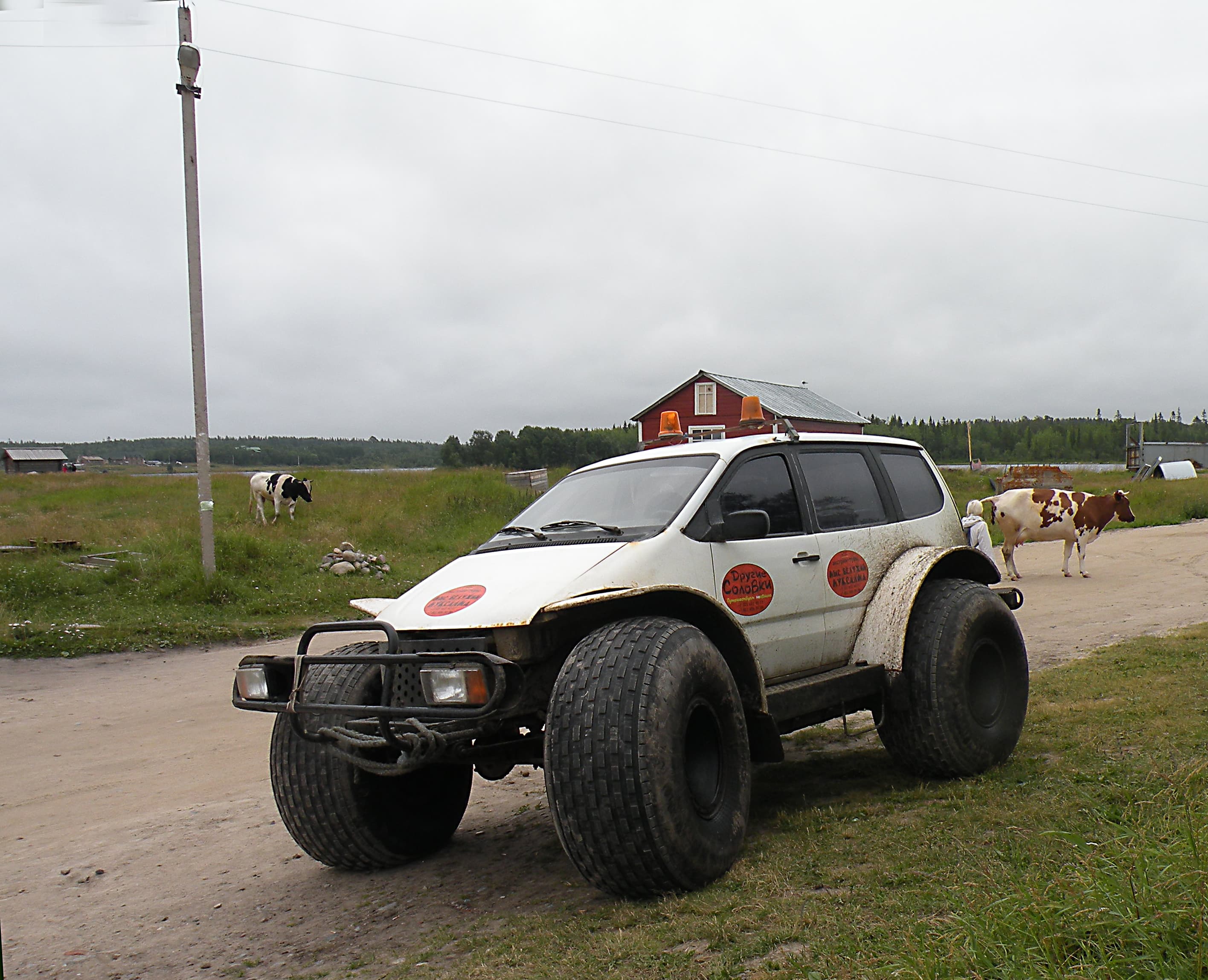
Photo: Vitold Muratov. Licensed CC BY-SA 3.0. Source and licence. See also the image credits page.

A lot of Brisbane 4WDs are highway cars with a costume. That is fine. The hinterland is still close enough that the costume gets used: Esk, the range, a wet clay fire trail after rain, a sandpark someone promised was “easy”. The tyre has to do both lives. Most drivers buy for the Instagram life and commute on the consequences.
Three families
Highway-terrain is a car tyre in work clothes. Quiet, decent wet, miserable in deep ruts. All-terrain is the SEQ default: a tougher carcass, a blockier pattern, still legal and tolerable on the ICB. Mud-terrain is a self-cleaning pattern that roars, wears, and aquaplanes earlier. It is for people who see mud on purpose.
The old site talked about 4x4 tyres as if they were jewellery for a “mean machine”. Some still are. A 33-inch mud tyre on a shopping dual-cab is jewellery. Buy it if you like jewellery. Do not call it a safety upgrade.
Carcass, load and the weekend fridge
Light-truck constructions and extra-load marks exist because a GVM and a rooftop tent are real. A passenger all-terrain in a pretty size can still be underbuilt. Read the load index. If you have a lift and a heavier wheel, you have changed the job. A fitter who only talks about looks is selling a sticker.
Pressures on dirt, pressures on the Bruce
Dropping pressures on a corrugated road is how you stop the car from bouncing itself to pieces. It is not “as low as my mate did in 2004”. Too low and you roll a bead or cut a sidewall on a shale edge. Carry a compressor. Reinflate before you join the Bruce or the Warrego. A soft all-terrain at 110 is a heat bomb.
Wet clay and wet bitumen
The same pattern that claws clay can skate on a painted Brisbane ramp. All-terrains with a decent siping story exist. If your week is 90 per cent bitumen, buy that story. Keep a recovery board, not a fantasy.
Match all four. AWD and 4WD systems do not love mixed diameters. Mixing tyres is how transfer cases get a second job.
The hinterland is close. That is why the tyre has to be honest about the other five days. Buy for the ratio, not the highlight reel.
A longer look at the same job
The short version of 4WD tyres for the SEQ hinterland is the part you will remember in a fitting bay. The longer version is how that advice survives a Brisbane year: heat in January, a storm in February, a pothole week in March, a highway run at Easter, and a fitter who is busy on a Friday. This desk exists so the longer version still has somewhere to live.
Start with the car you have, not the car in the brochure. Read the door placard. Photograph both sidewalls. Write the pressures down. If you tow, if you run a roof box, if the car is a hybrid with a heavy nose, say those things out loud before anyone quotes a special. A special that ignores load is not a special. It is leftover stock.
How this sits with the rest of the archive
Nothing on Brisbane Tyres is meant to be a lone pamphlet. The car tyres hub still opens the same door the 2007 site opened. Motorcycle tyres still warn you to match front and rear. Tyre suppliers still tell you to test knowledge. Cheap tyres still tell you not to panic-pay, and not to confuse a bargain with a carcass. Care and safety is the weekly habit. Queensland roads is the climate. History is why the brands on a quote have grandparents.
If you are reading this article because a quote confused you, take questions to ask before you buy and how to compare tyre quotes into the bay. If you are reading it because a tyre already failed, take punctures and when to replace. If you are reading it because the sky has gone black, take wet-weather and aquaplaning.
Local details that do not fit a national brochure
Coarse chip-seal on suburban arterials roars a pattern that was quiet on a European press loop. Concrete on the Gateway drones a budget block. Painted crossings after a first rain are ice. A west-facing brick wall in Woolloongabba is an oven. A flooded dip on a hinterland road is not a place to test remaining groove. These are not colourful asides. They are the test conditions.
A fitter who has only worked in a climate-controlled warehouse will still mount a tyre correctly. A fitter who has seen a January week in this city will also ask about the spare, the alignment and the storm. Prefer the second person. Pay them.
What we will not tell you
We will not crown a single “best tyre in Brisbane”. We will not pretend a house brand is secretly a flagship. We will not tell you to ignore the placard because a forum likes a plus-size look. We will not tell you a string plug is a career. We will not tell you a ten-year-old tyre is fine because it has tread. Those sentences sell well. They fail on the road.
We will tell you to measure, to write dates down, to buy the load index you need, and to replace a wet-season tyre before the legal minimum makes the decision. That is a dull kind of editorial courage. It is also the only kind that belongs on a site that started as information on all the different tyres in the market.
A closing habit
Once a month, on a morning the car has sat, check pressures, look at inner shoulders, look for nails, look at the week code if you still do not know it. Once a season, before the first proper storm, measure tread. Once a year, get an alignment printout if the car has hit anything it felt. Those three loops will save more money than a coupon.
If something on this page is wrong for your vehicle, write to the contact desk and name the article. We correct dates and we correct advice. The old site was chatty. We kept the chat and added the duty of care.
A worked example from a ordinary Saturday
Imagine a 2016 medium SUV in Coopers Plains, door placard 225/65R17 102H, two school seats, a dog, a weekend bag. The fronts are feathered inside. The rears have 4 millimetres. A chain has a $99 special in 225/65R17 98H. A local independent has a mid-range 102H for $40 more a corner and will align the car the same morning. The cheap special is not cheaper. It is a lower load index on a car that already lives full, and it will inherit a bent alignment. The independent is the grown-up quote.
Now change one fact: the car is a third car that does 2,000 kilometres a year to a boat ramp in the dry. The cheap special, if the date is fresh and the fitter will still write an invoice, can be the right rung. The article you are reading is how to tell those two Saturdays apart. The facts change. The method does not.
If you want a second human to look at a quote, that is what the write for us and contact pages are for — not to sell you a tyre, to tell you whether the sentence on the invoice is complete. Completeness is the product this publication actually sells.
Frequently asked
- Can I daily an aggressive mud tyre in Brisbane?
- You can. You will wear it out, roar, and slide earlier in the wet. Most SEQ drivers want all-terrain or highway-terrain.
- Do I drop pressures on dirt?
- Yes, with a plan to reinflate before the highway, and without going so low you roll a bead.
- Are all-terrains enough for a wet fire trail?
- Usually, if you drive like an adult. They are not a winch.
More from Queensland Roads

Potholes, heat and premature wear in Brisbane
A summer of sun and a week of rain can age a tyre faster than the odometer admits. How SEQ roads actually spend your rubber.
11 May 2025
Tyres for the Bruce Highway
Long, hot, sometimes wet, sometimes patched. What a Brisbane-to-the-north run actually asks of a passenger or SUV tyre.
16 March 2025
Aquaplaning on flooded Queensland roads
Speed, water depth and remaining grooves decide whether you are steering. What to do when a Brisbane storm turns a lane into a river.
30 January 2025